ServicesRoll Off Dumpster Rental
Roll Off Dumpster Rental in St. Cloud
We drop an open-top roll-off dumpster where you need it, you load it at your own pace, and we haul it away when the job is done. Tell us what you're throwing out and we'll match the yard size and weight allowance to the debris.
What a roll-off is and when it fits
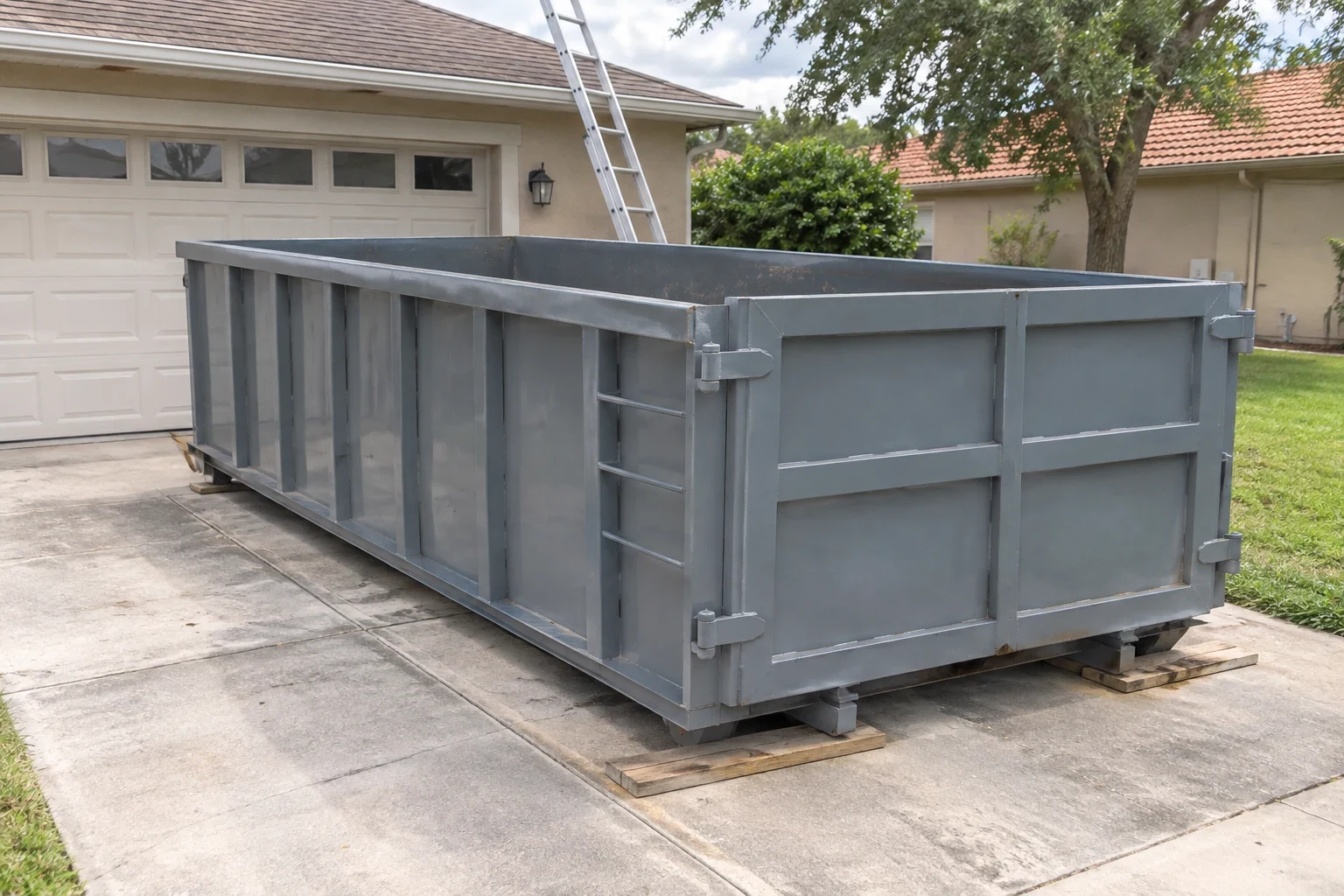
A roll-off is a steel container with an open top and a swing door at one end, carried on a truck with a hoist that rolls it on and off the bed. It sits on your driveway or job site for a set rental period, then we pick it up and take the debris to the proper disposal or recycling facility.
It's the right call for one-time projects that produce more than a few trash cans of material: a garage or estate cleanout, a kitchen or bath remodel, flooring tear-out, a fence replacement or a roof tear-off. For ongoing weekly trash at a business, our front load dumpster service is the better fit.
We size the container by what's going in it, not just how much. A load of drywall and cabinets behaves very differently from a load of shingles or broken concrete, and we explain why before you commit.
What your rental includes
Delivery and placement
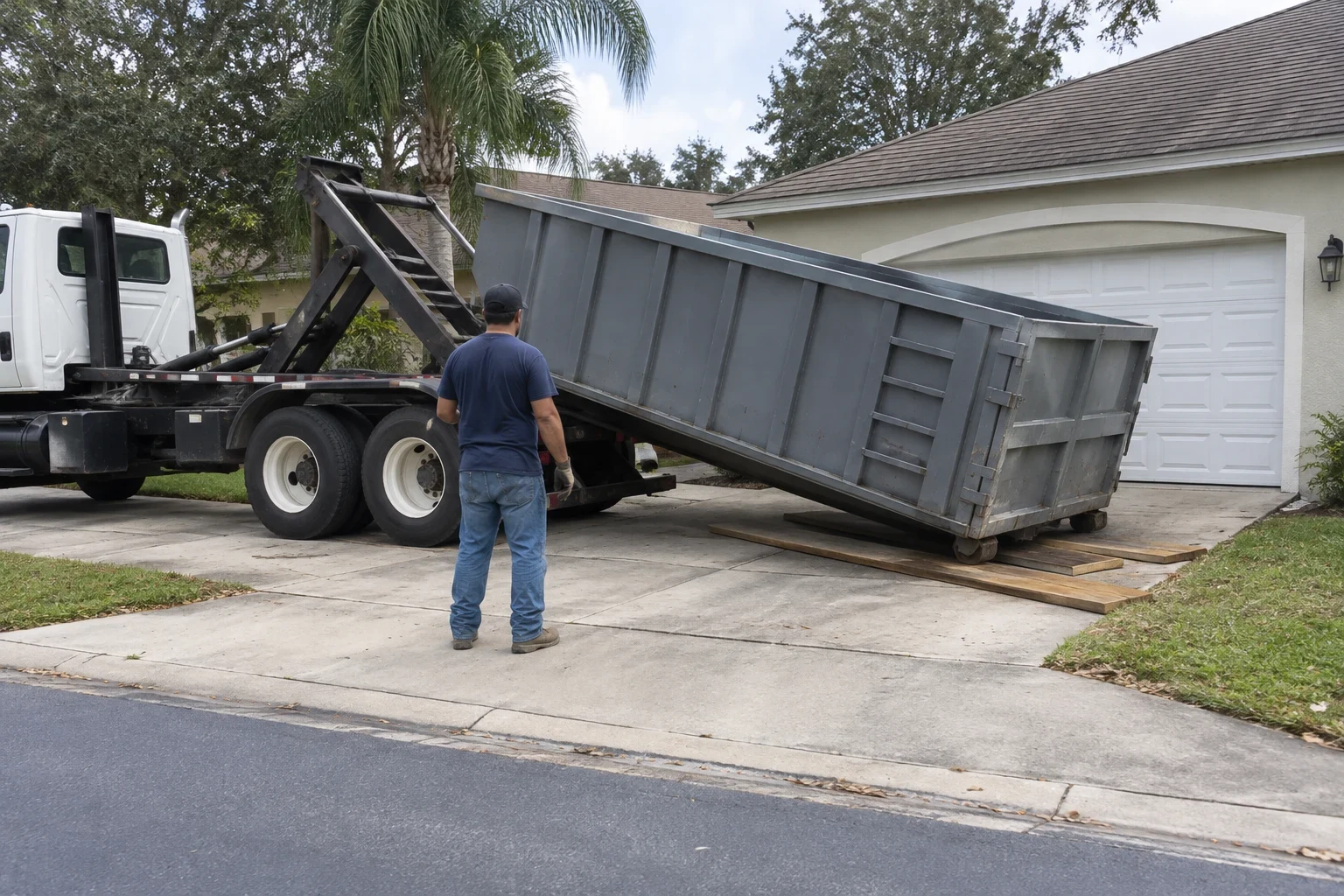
Our driver sets the container where it can be loaded easily and picked up safely, with clearance for the truck's cable and the door swing. We lay boards under the steel rails on concrete or pavers to spread the load.
A size matched to your debris
Common yard sizes run from small containers for a single-room cleanout to large ones for whole-house or new-construction debris. We ask about the material, the square footage and the access before recommending one.
A clear weight allowance
Every rental includes a tonnage allowance, and we tell you what it is up front. Heavy material like roofing, tile and concrete fills the weight limit long before it fills the box, so we plan for that.
Pickup and haul away
When you call for pickup, we remove the container and take the load to the proper disposal or recycling facility for that material. You don't handle any tipping fees or dump runs yourself.
Straight answers on what can go in
Household junk, furniture, wood, drywall, roofing and yard debris are usually fine. Tires, paint, batteries, chemicals and appliances that still hold refrigerant need separate handling, and we'll tell you which is which before you start loading.
Signs a roll-off makes sense for your project
- Your trash cart is full for weeks
- Curbside service is built for household trash, not a garage worth of boxes and old furniture. If the overflow keeps stacking up, one container clears it in a single load.
- You're tearing out more than you're buying
- Remodels generate cabinets, countertops, drywall and flooring faster than any pickup truck can haul. A container on site keeps the work area clear and the crew moving.
- A roof is coming off
- A tear-off sends layers of shingles, felt underlayment and nails straight down. Parking a roll-off under the eave lets roofers drop debris directly in instead of piling it in the yard.
- Storm cleanup after hurricane season
- Broken fencing, damaged soffit, soaked carpet and downed limbs pile up fast after a Central Florida storm. A container gives you somewhere to put it while you sort out the rest.
- You're clearing out a property
- Estate cleanouts and move-outs mean decades of belongings leaving at once. Loading directly from the house into the dumpster saves dozens of trips.
How a rental runs, start to finish
- 1
Call for a quote
Tell us what you're getting rid of, roughly how much, and where the container needs to sit. We recommend a yard size, explain the weight allowance and rental period, and give you a quote by phone.
- 2
Check placement and permits
Driveway placement usually needs nothing extra. If the container has to sit on a public street or right-of-way, a city permit may be required, and many subdivisions have HOA rules about how long a dumpster can stay out, so we flag both before delivery.
- 3
Delivery day
We back in, set the boards and lower the container so the door faces the direction you'll load from. Keep cars, trailers and low branches clear of the drop zone.
- 4
Load it right
Put flat, heavy items on the floor first and break down furniture to fill gaps. Keep everything below the top rail, because an overfilled load can't be safely tarped or legally hauled.
- 5
Call for pickup
When you're finished, or the rental period is up, call and we schedule the haul away. We take the container and leave the driveway clear.
What moves the price of a roll-off
We quote a flat rate for the container size, rental period and weight allowance, and we explain each piece so there are no surprises on the final bill. The biggest swings come from what's in the load, not just how full it is. Here's what changes the number.
- Container size
- Larger yard sizes cost more to deliver and dispose of. Picking the right size the first time is usually cheaper than ordering a second container or a swap.
- Debris weight
- Shingles, tile, concrete and dirt are dense, so they can exceed the tonnage allowance in a half-full box. Any weight over the allowance is billed by the ton, which is why we ask what you're loading.
- Rain in an open container
- Summer afternoon thunderstorms soak carpet, drywall and insulation, and that water is weighed at the scale like everything else. Tarping the load between work sessions keeps the weight honest.
- Rental length
- Each rental includes a set number of days. Extra days are available when a project runs long, and we tell you the daily cost when you book.
- Restricted items and placement
- Items that need special disposal, like tires or mattresses, can carry added fees. A street placement that needs a permit can add cost too.
Roll-off dumpster questions
- What size dumpster do I need for a kitchen remodel?
- A mid-size container usually handles a typical kitchen: cabinets, countertops, drywall and flooring. If you're also pulling tile or a second room, size up or plan for the extra weight. Describe the project on the phone and we'll give you a specific recommendation.
- Will the dumpster damage my driveway?
- We set boards under the rails to spread the weight across your concrete or pavers. Avoid placing it over soft lawn, septic lines or irrigation heads, since a loaded container can weigh several tons. We'll help you pick the firmest spot.
- Can I put roofing shingles in a roll-off?
- Yes. Shingles are one of the most common loads we haul. They're heavy, so for a full tear-off we size the container by the number of roofing squares and confirm the weight allowance covers it.
- Do I need a permit in St. Cloud?
- Not if the dumpster sits on your own driveway or property. Placement on a public street or sidewalk may require a permit from the city, and HOA rules can limit placement or duration. We'll point out what applies when you call.
- What can't go in the dumpster?
- Hazardous materials like paint, solvents, pool chemicals, batteries and propane tanks are not allowed. Tires and appliances with refrigerant need separate handling. When in doubt, ask before you load it.
- Can I keep the dumpster longer if my project runs over?
- Usually, yes. Call before your rental period ends and we'll extend it at the daily rate we quoted, or swap in an empty container if the first one is full.
Ready to clear out the debris
Tell us what you're tossing and where the container should sit. We'll recommend a size, explain the weight allowance and set a delivery date.