ServicesFront Load Dumpster Service
Front Load Dumpster Service in St. Cloud
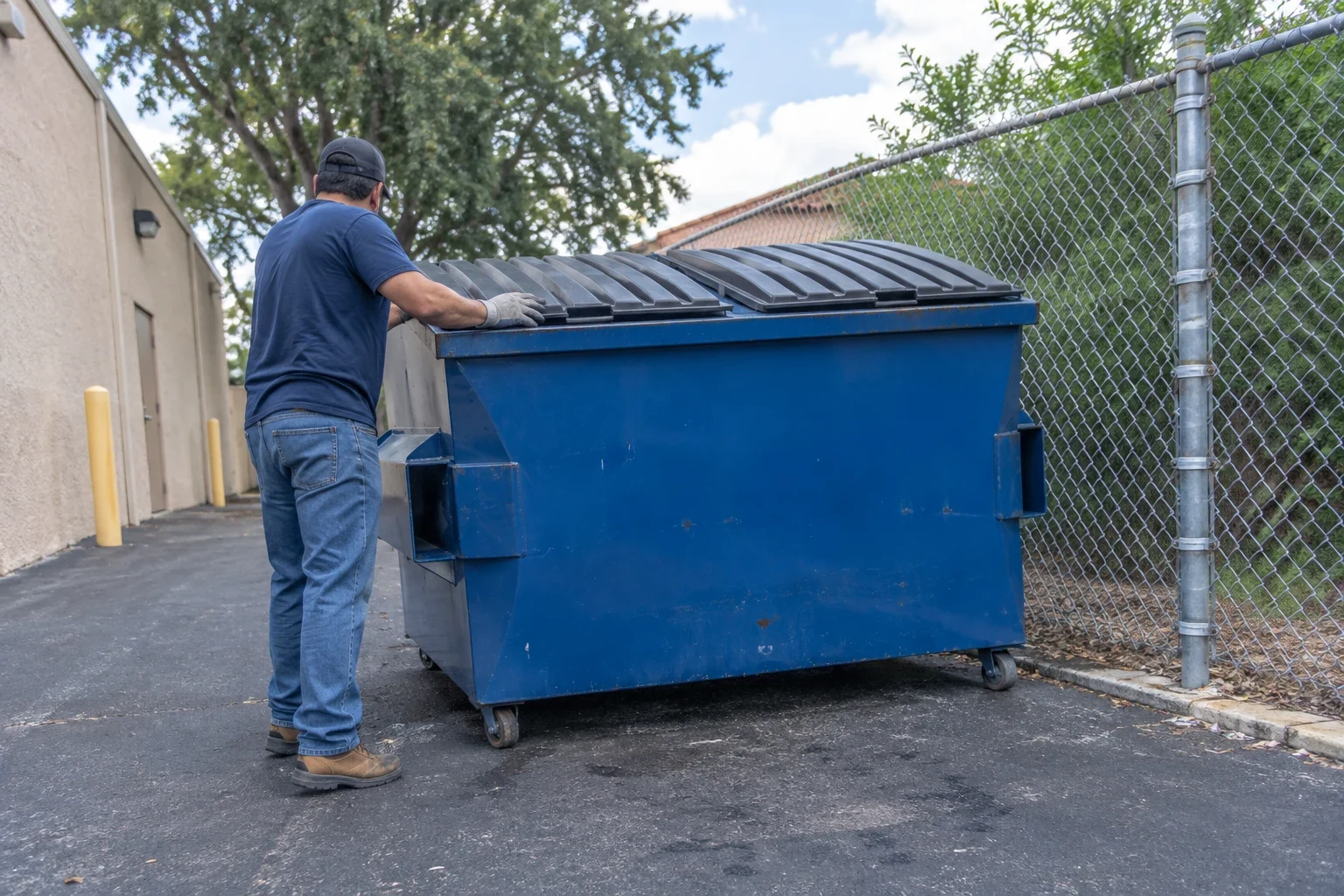
We set a lidded front load dumpster where our truck can reach it and empty it on the schedule your business needs. You get one container sized to your real volume, a pickup day you can plan around, and a quote that spells out what you pay for.
What front load service is and who it fits
A front load dumpster is a permanent container with steel fork pockets on each side. Our truck slides its forks into those pockets, lifts the container over the cab and tips it into the hopper, then sets it back on your pad. Nothing leaves your property but the trash, so the container stays put between pickups.
It fits steady, repeating waste: restaurants, retail shops, offices, clinics, small apartment buildings and HOA common areas. If you are clearing out a building or running a remodel or roofing job with a start and an end date, our roll off dumpster rental is the better match, because that container is hauled away once the debris is loaded.
What your service includes
- A container sized to your volume
- We ask what you throw out in a typical week, including flattened cardboard, food waste and packaging. Then we match the yard size and pickup frequency to that number instead of guessing high.
- A placement check before delivery
- The truck needs a straight approach and open air above the container, because the forks lift it overhead. We look at power lines, tree limbs, awnings and parked cars before we pick a spot.
- Lidded steel containers
- Plastic lids close over the top to keep rain out and keep birds and flies off the bags. Rainwater soaks into cardboard and paper and adds weight, so closed lids matter here.
- Scheduled pickups
- We empty the dumpster on the same days each week. You know when the hopper truck comes, so your staff can bag and break down boxes ahead of it.
- Schedule changes as you grow
- If a slow season or a new location changes your volume, tell us by phone and we adjust the size or the number of pickups.
Signs your business needs front load service
Carts overflow before pickup day
When a row of 96-gallon carts is full by midweek, you have outgrown curbside carts. One front load container holds far more and takes up less ground.
Cardboard stacks up by the back door
Loose boxes block exits, blow around and soak through in afternoon storms. A dumpster with a closed lid gives broken-down cardboard a dry place to go.
Odor and flies in warm months
Food scraps sitting a week in Florida heat break down fast and draw pests. More frequent pickups shorten how long waste sits, which is the actual fix for the smell.
Staff hauling trash off site
If employees are filling personal trucks or using a shared container down the street, that time costs you. Service on your own pad ends the trips.
How we start and run your service
- 1
Talk through your waste by phone
Tell us what kind of business you run, roughly how many bags and boxes you fill, and where the trash goes now. We use that to suggest a size and a pickup frequency.
- 2
Confirm the spot
We check that the location has a firm, level surface, ideally a concrete pad, and enough clearance for the forks to lift the container overhead. If a landlord or property manager sets rules for enclosures, we place it to fit them.
- 3
Delivery
The truck sets the dumpster on the pad with the fork pockets facing the approach lane. We point out which way the lids open so your team loads it without blocking the next pickup.
- 4
Regular emptying
On each scheduled day we lift, empty and return the container. Keep the lids closed and the area in front clear of cars and pallets so the driver can line up the forks.
What sets the price of front load service
Your rate comes from the container, how often we empty it and what goes into it. We give you a quote by phone that lists those pieces so you can see what moves the number. Changing one of them, like dropping a pickup day, changes the rate in a way you can follow.
- Container yard size
- A larger container costs more per pickup but may let you cut a pickup day. We help you weigh the two against each other.
- Pickups per week
- Each pickup is a truck trip, so frequency is often the biggest factor. Food businesses usually need more trips than offices to control odor.
- Weight and material
- Wet food waste, rain-soaked cardboard and dense material weigh more than dry office trash. Heavy loads cost more to haul away.
- Extra pickups and overfills
- Lids that cannot close mean bags on the ground and a slower lift. An added pickup during a busy stretch is usually cheaper than paying for overflow.
Front load dumpster questions
Something not covered here? (407) 410-3186
What sizes of front load dumpsters are there?
Front load containers commonly run from about 2 to 8 cubic yards. A small office may only need the low end, while a busy restaurant often needs a larger container emptied several times a week. We recommend a size after hearing what you throw out, and you can change it later.
How is this different from a roll off dumpster?
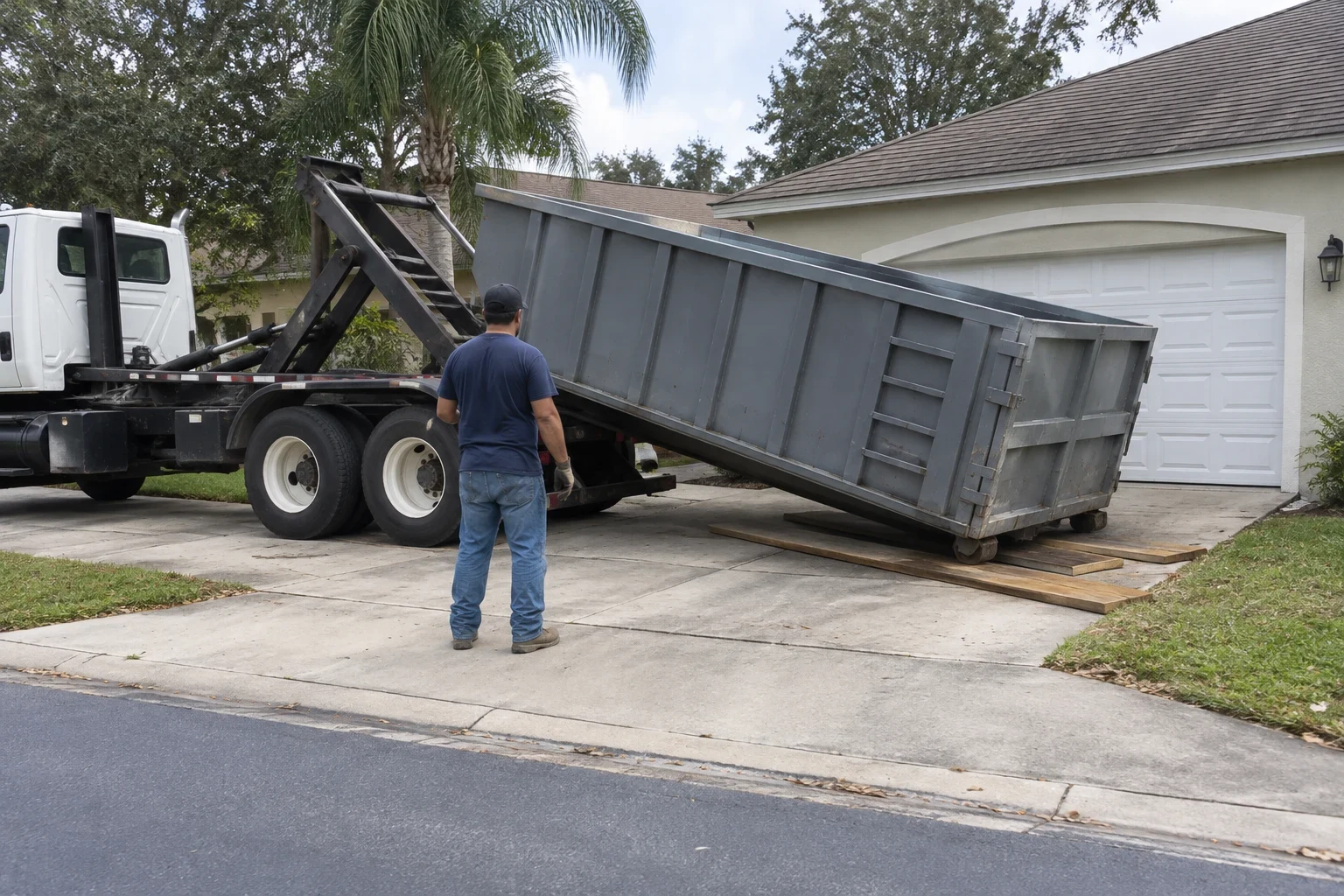
A front load container stays on your property for ongoing service and is emptied into the truck on a schedule. A roll off is a large open-top box dropped off for a project, then hauled away whole when it is full. Our roll off dumpster rental page covers cleanouts and job site debris.
What should stay out of the container?
Keep out liquids, paint, oil, solvents, batteries, tires, propane tanks and electronics. Liquids leak through the drain plug and can spill during the lift, and hazardous items need separate disposal. If you are unsure about a material, ask us when you call.
What happens to the dumpster during hurricane season?
From June through November, keep the lids closed and the area around the container clear of loose items when a storm is forecast. A loaded steel container is heavy, but open lids catch wind and loose debris can blow around it. Call us if a storm changes your pickup needs.
Does the dumpster need a concrete pad?
A concrete pad is the best surface because the weight of the truck and a full container can crack asphalt and rut dirt or gravel, especially after heavy rain. If you do not have a pad, we look at the site with you and pick the firmest level spot the truck can reach.
Set up regular trash pickup for your business
Tell us what you throw out and where the container would sit. We will suggest a size and schedule and give you a quote by phone.