ServicesCommercial Trash Pickup
Commercial Trash Pickup in St. Cloud
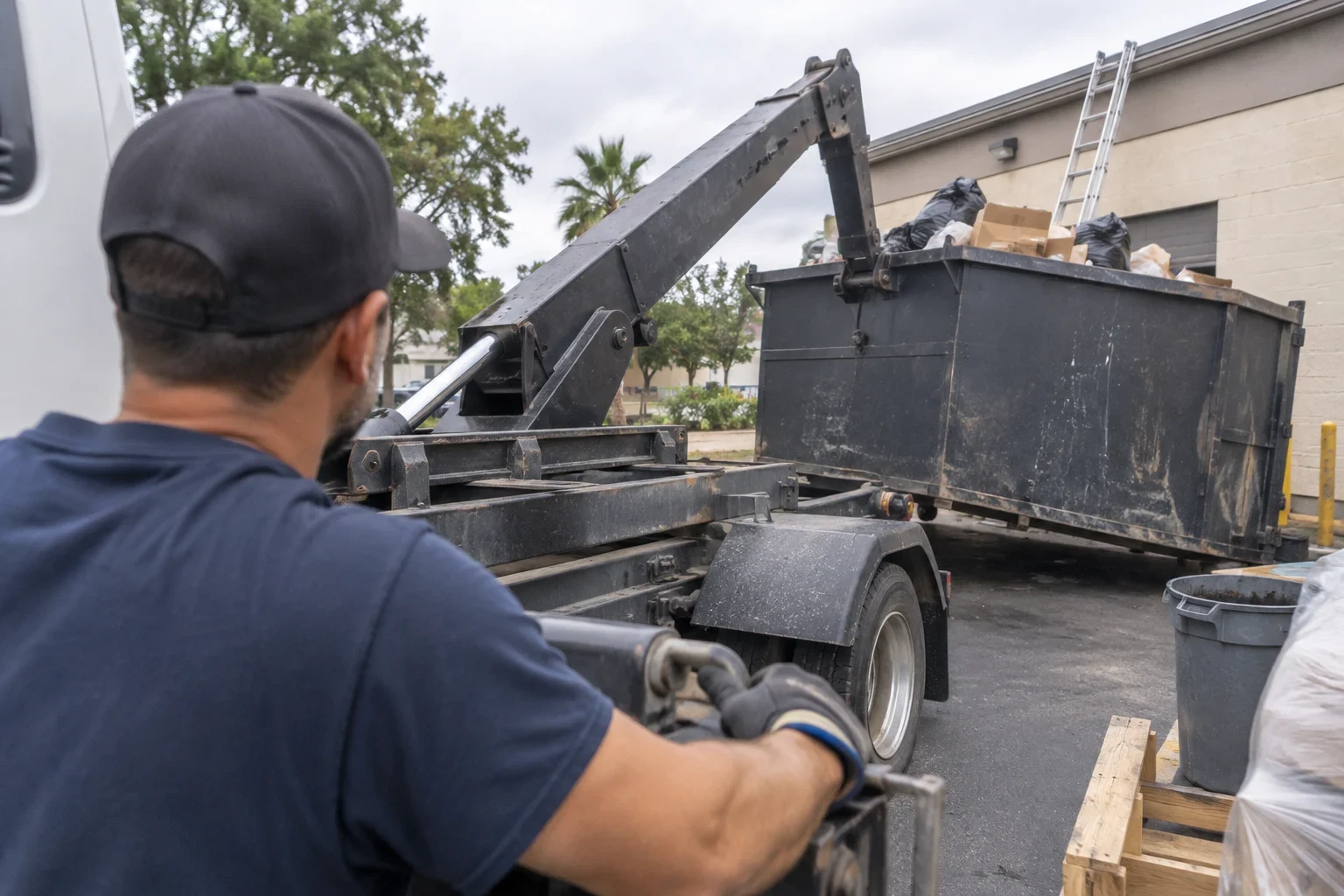
We set a container at your business and empty it on fixed days, sized to the waste you really produce. Restaurants, shops, offices and small warehouses get a schedule that keeps lids closed and lots clean, with a written quote before anything starts.
A standing container and a fixed schedule
Commercial trash pickup is an ongoing service. A container stays on your property, and our truck empties it on the same days each week. You choose the container size and the pickup frequency. Most small businesses land somewhere between one and three pickups a week, and the right mix depends on what you throw out, not only how much.
Density matters as much as volume. Flattened cardboard is light and stacks tight. Food scraps are heavy and wet, and in summer heat they start to smell within a day or two. A container that holds a week of office paper may need emptying twice a week behind a kitchen. We ask about your waste before we suggest a schedule, so you are not paying to haul air or dealing with overflow by Thursday.
If you have a one-time load, like a store buildout or a warehouse cleanout, our roll off dumpster rental is the better fit. For details on the containers themselves, see our front load dumpster service page.
What the service covers
- A container sized to your volume
- Front load containers are measured in cubic yards, and common commercial yard sizes run from about 2 to 8. We match the size to your bags, boxes and food waste so the lid closes on pickup day.
- Fixed pickup days
- Your pickups happen on set days of the week. Staff know when the container will be empty, and you can plan heavy disposal, like weekly stock deliveries, around it.
- Lidded steel containers
- Closed lids keep afternoon rain out. Rainwater adds weight, soaks cardboard into a pulp that sticks to the walls, and drains out as dirty runoff. Lids also keep birds and raccoons out of food waste.
- Extra pickups when you need them
- A big inventory turnover or a busy holiday week can fill a container early. Call and we can arrange an added pickup on top of your regular schedule.
- A written, line-item quote
- Your quote lists the container size, the number of pickups per week and any extra charges, such as added pickups or overweight loads. You see what you are paying for before service starts.
Signs your current setup is not working
The lid won't close
An overfilled container lets rain in and trash blow out. Many haulers also charge for loads stacked above the rim, because they can spill when the truck lifts the container.
Odor and flies by midweek
Wet waste sitting four or five days in Florida heat breaks down fast. More frequent pickups, not a bigger container, usually fix this.
Bags piling up beside the container
Overflow on the pavement draws pests and complaints from neighbors and landlords. It is a clear sign the size or frequency is off.
Staff hauling trash off site
If employees are loading pickup trucks or using a personal cart to get rid of extra trash, that time costs more than a correctly sized service.
Your volume has changed
A schedule set when you opened may not fit after you added seating, a second shift or online orders. Waste volume should be checked against the plan once in a while.
How we set up your pickup
- 1
A phone call about your waste
We ask what kind of business you run, what goes in the trash, roughly how many bags or boxes a day, and where the container can sit. From that we give you a quote with a suggested size and schedule.
- 2
Checking the placement
A front load truck drives straight at the container, lifts it with forks and tips it over the cab. That means a clear straight approach and open space overhead, with no low branches, awnings or power lines. A concrete pad is best, since a loaded steel container can sink into asphalt that softens in summer heat.
- 3
Delivery and first pickup
We deliver the container to the agreed spot and confirm your pickup days. If it sits inside a gated enclosure, the gates need to be unlocked and open on those days.
- 4
Adjusting as you go
After the first few weeks, we can look at how full the container is on pickup days. If it is half empty or overflowing, we change the size or frequency to match.
What moves the price
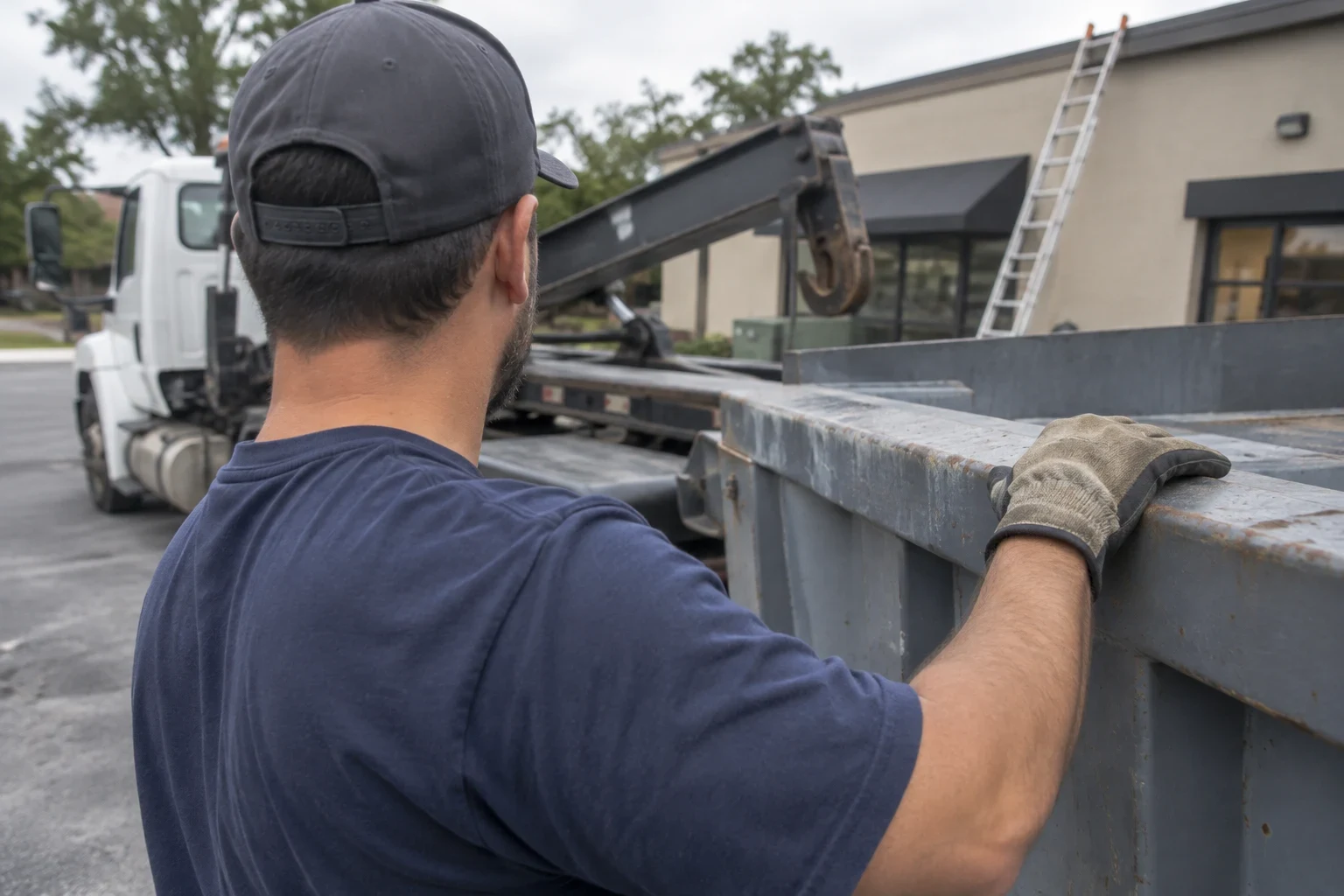
Commercial pickup is priced on a recurring basis, and a few details drive most of the number. We explain each one when you call so your quote makes sense line by line. No dollar figures here, because two businesses on the same street can need very different service.
- Container size
- Larger containers cost more per pickup but can mean fewer trips. The cheapest setup is the one that is close to full on each pickup day.
- Pickup frequency
- Each added pickup per week adds a truck visit. Food businesses often need more frequent pickups for odor control even when the volume is modest.
- Type and weight of waste
- Dense, heavy waste like wet food scraps or packed materials weighs more per yard, which affects disposal costs. Light cardboard is cheaper to haul by volume.
- Access to the container
- A container in a tight lot, behind a locked enclosure or with limited overhead clearance can take more time on each visit. Clear access keeps the service simple.
Commercial trash pickup questions
Something not covered here? (407) 410-3186
What can't go in a commercial trash container?
Hazardous materials stay out: liquid paint, motor oil, solvents, pool chemicals, batteries and propane tanks. Tires and electronics are usually restricted too. We go over the full list when you call, because sending these to a landfill can cause fines and safety problems.
Can I change my pickup schedule later?
Yes. If your volume goes up or down, call us and we can adjust the container size or number of pickups. Seasonal businesses often run a heavier schedule in busy months and a lighter one in slow months.
What happens to pickups during a tropical storm or hurricane?
When a storm is coming, pickups may shift to before or after the bad weather for crew safety. Before a storm, keep the lid closed and avoid overfilling, since loose trash and cardboard turn into wind-blown debris. We will let you know about any changes to your days.
Do I need an enclosure for the container?
That depends on your property. Many shopping plazas and commercial landlords require a screened enclosure, so check your lease and with the city if you are unsure. If you have one, we will tell you the gate width and clearance the truck needs.
How is this different from renting a roll-off?
A roll-off is a large open container for a one-time job, like a cleanout or renovation, and it is hauled away when full. Commercial pickup uses a smaller lidded container that stays put and gets emptied on a schedule. Many businesses use both at different times.
Set up a pickup schedule that fits
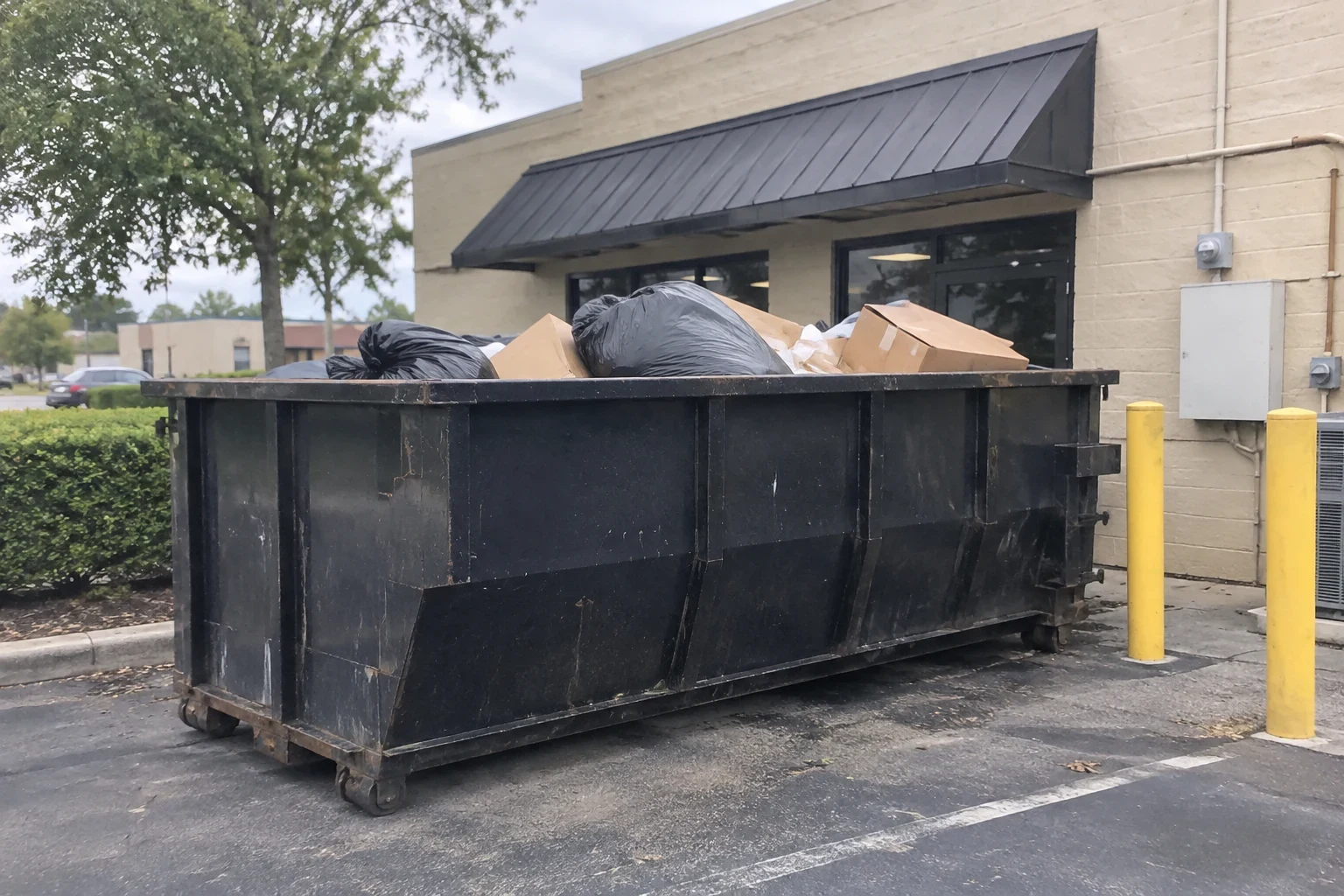
Tell us what your business throws out and where the container can go. We will suggest a size and schedule, give you a written quote, and you can start service when it suits you.