ServicesConstruction Debris Removal
Construction Debris Removal in St. Cloud
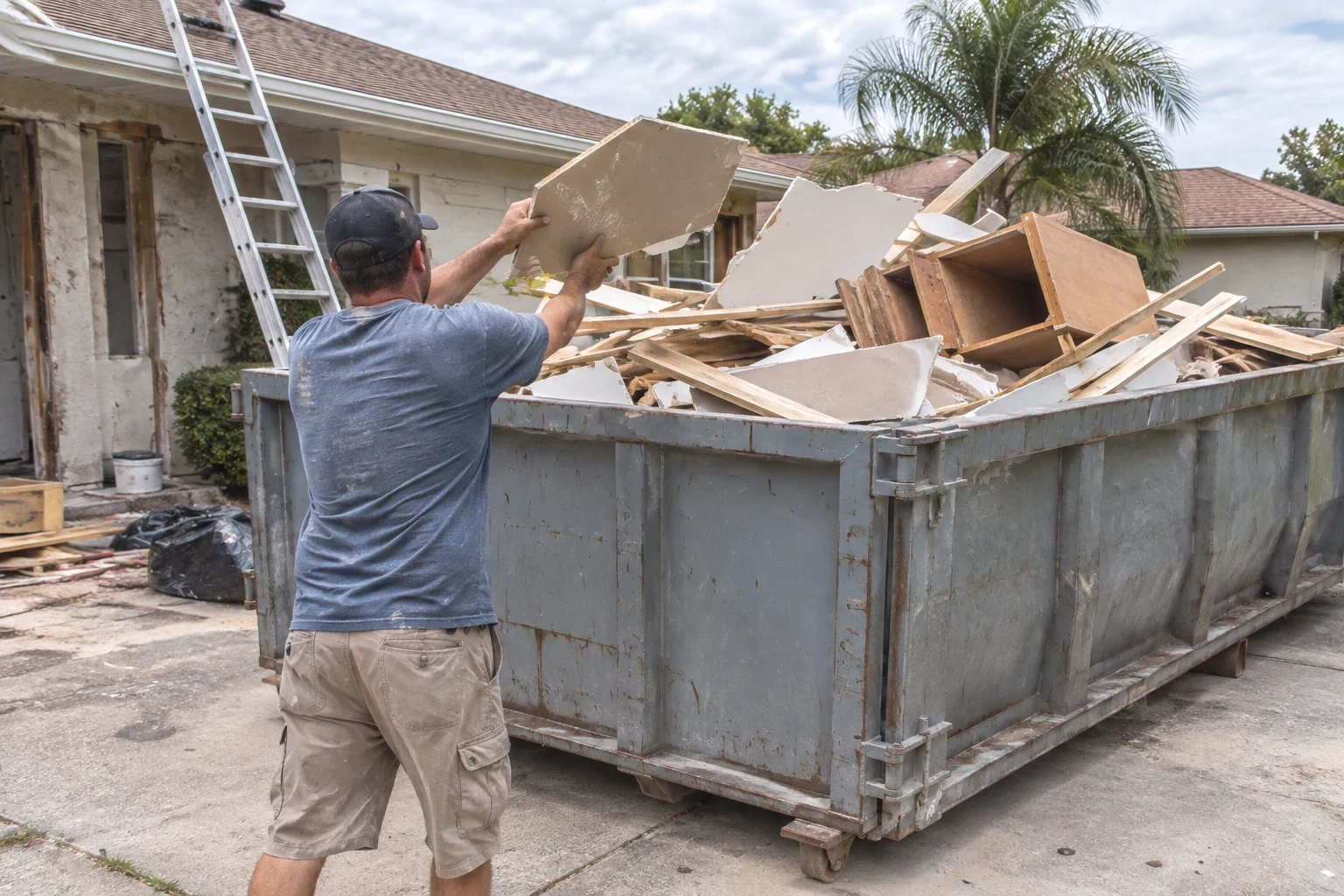
Roofing tear-offs, drywall demo, old cabinets, broken block and concrete all leave a pile. We size a roll-off to the weight of what you're throwing out, place it where your crew can load it, and haul it away when it's full.
Debris removal planned around weight, not just volume
Construction debris is heavier than most people expect. A dumpster full of asphalt shingles or broken concrete can hit its weight limit long before it looks full, while the same container loaded with framing lumber and cabinet boxes fills by volume first. We ask what you're tearing out before we pick a container, so the size you get fits the material.
Most homes around St. Cloud are concrete block with stucco, drywall inside and shingle or tile roofs. That mix means a remodel or reroof here often produces dense, heavy debris. Telling us the roof squares, the square footage of flooring or the length of a block wall helps us quote a container that won't run over on weight.
This page covers debris from active projects. For a general cleanout or a longer rental, see Roll Off Dumpster Rental, and for ongoing business trash, see Front Load Dumpster Service.
What our debris removal covers
- A container matched to the material
- We choose yard sizes based on what's going in. Heavy loads like concrete, pavers and tile go in smaller containers so the weight stays legal for the truck, and lighter demo debris gets more room.
- Careful placement
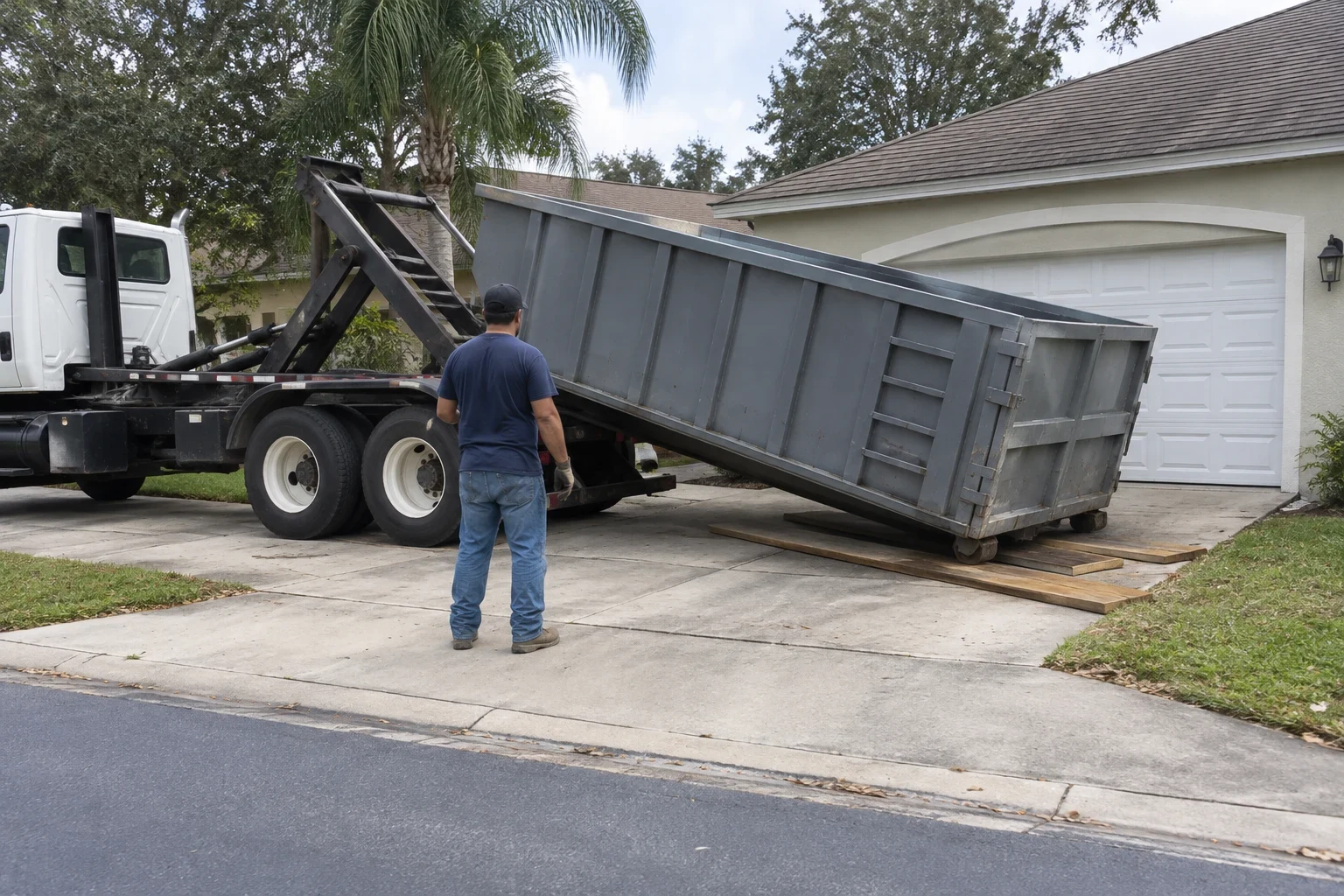
- We set boards under the roll-off rails to spread the load on driveways and pavers. We'll also ask about overhead lines, gate widths and soft ground before the truck backs in.
- Swap-outs on longer jobs
- When a container fills mid-project, we pick it up and drop an empty one so your crew keeps working. Schedule the swap by phone when you see it getting close.
- Haul away and disposal
- We haul the full container to the appropriate facility. Separated clean concrete or yard waste can sometimes go to a different site than mixed debris, which we'll explain when we quote.
- Straight answers on what's allowed
- Paint, solvents, batteries, tires and refrigerant appliances can't go in with general debris. We tell you up front so nothing gets rejected or added to your bill at the scale.
Signs it's time to get debris off the property
Shingles piling on the lawn
A roof tear-off sheds old shingles, felt and nails fast. Left in the grass, nails scatter and the pile becomes a hazard for anyone walking the yard.
Trailer runs are eating the day
If someone on the crew spends hours driving loads to the landfill, a roll-off on site usually costs less than the lost labor.
Demo debris is soaking up rain
Summer afternoon storms soak open piles of drywall and insulation. Wet gypsum gets heavy and breaks down into a mess, so getting it into a container and tarped matters.
Your HOA has sent a notice
Many neighborhoods have rules about debris piles in view of the street. A dumpster with a clear pickup date usually settles the issue.
Concrete or pavers are coming out
Breaking out a patio, driveway section or block wall creates weight that a pickup truck can't safely carry. It needs a container rated for heavy material.
How a debris removal job runs
- 1
Quote by phone
Tell us the project, the main materials and the rough size, such as roof squares or square feet of tile. We recommend a container and explain what the quote covers.
- 2
Delivery and setup
Our driver places the roll-off where you've asked, with boards under the rails. We check that the door swings open so you can walk heavy items in instead of lifting them over the wall.
- 3
Loading
Spread the weight evenly and keep debris below the top rim; overfilled containers can't be tarped or hauled legally. Put the heaviest material in first and toward the front.
- 4
Pickup or swap
Call when it's full or the job wraps up. We haul it away, and on bigger projects we drop an empty container on the same trip.
What moves the price of debris removal
Your quote depends on the container, the material and how long you keep it. We walk through each piece on the phone and explain what the flat rate includes and what would add to it, so the final bill matches what you were told.
- Container size
- Larger yard sizes cost more to haul. Picking the right size the first time avoids paying for a second container you didn't plan on.
- Debris weight and type
- Each container includes a weight allowance. Shingles, concrete, tile and wet drywall use it up quickly, so heavy loads affect the price more than bulky light ones.
- Rental length and swaps
- A short tear-off needs one container for a few days. A full remodel may need several swaps over weeks, and each haul is part of the cost.
- Placement and permits
- A driveway placement is simplest. If the container has to sit in the street or right-of-way, a permit may be required, and tight access can change which truck we send.
Construction debris removal questions
Something not covered here? (407) 410-3186
Can I mix concrete with other construction debris?
You can, but it often costs more. Mixed loads go to a facility that charges for everything at the mixed rate. Clean concrete or block kept separate may be handled differently, so ask us when you get your quote.
Will the dumpster damage my driveway?
A loaded roll-off is heavy, so we set boards under the rails to spread the weight. Fresh concrete, thin pavers and cracked slabs are more vulnerable, so let us know about any of those and we'll suggest the best spot.
Do I need a permit for the dumpster?
On your own driveway, usually not. A container in the street or public right-of-way may need one, and some HOAs have their own rules. We'll talk through placement before delivery so you know which applies.
What happens if it rains on the debris?
Drywall, insulation and wood absorb water and gain weight, which can push a load over its allowance. Keeping a tarp over the container between work sessions is the simplest way to avoid that.
How full can I load it?
Keep everything level with or below the top edge. Debris sticking out above the walls can't be covered or hauled safely, and we'd have to ask you to remove some before pickup.

Get the right container on site before demo starts
Tell us what's coming out and how big the job is. We'll recommend a size, explain the weight allowance and set a delivery date.